Dongfeng Liuzhou & Beibu Gulf Port: China's Dual Circulation
Dongfeng Liuzhou Motor and Beibu Gulf Port partner to boost China's 'dual circulation' strategy. Read more about this Guangxi initiative!
Guangxi Gears Up: Dongfeng Liuzhou Motor and Beibu Gulf Port Forge Alliance to Fuel China's Dual Circulation Strategy
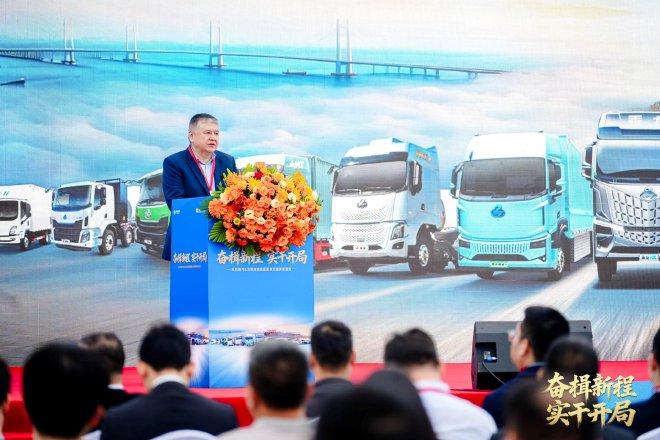
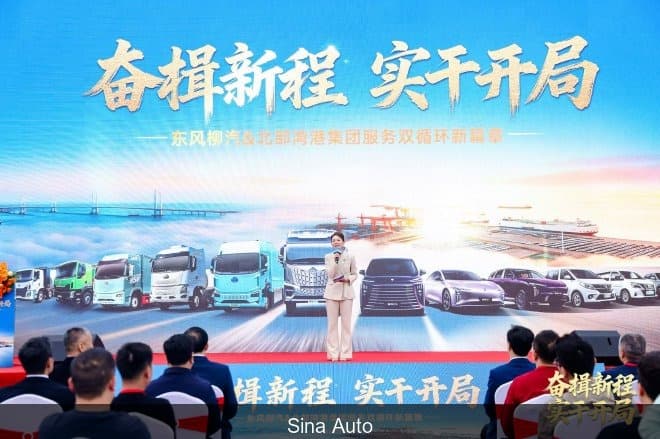
Qinzhou, China – February 28, 2026, saw the unveiling of a strategic partnership between Dongfeng Liuzhou Motor and Beibu Gulf Port Group, two Guangxi-based state-owned enterprises, signaling a major push to bolster China's "dual circulation" economic strategy. This initiative, timed to coincide with the start of the 15th Five-Year Plan, aims to strengthen the domestic economy while simultaneously engaging with international markets, a concept increasingly relevant as Chinese automotive brands like BYD, NIO, XPeng, Li Auto, Geely, Chery, and Great Wall expand their global footprint. The collaboration highlights the growing importance of integrated manufacturing and logistics in the modern automotive landscape, a trend that could reshape global supply chains and challenge established players.
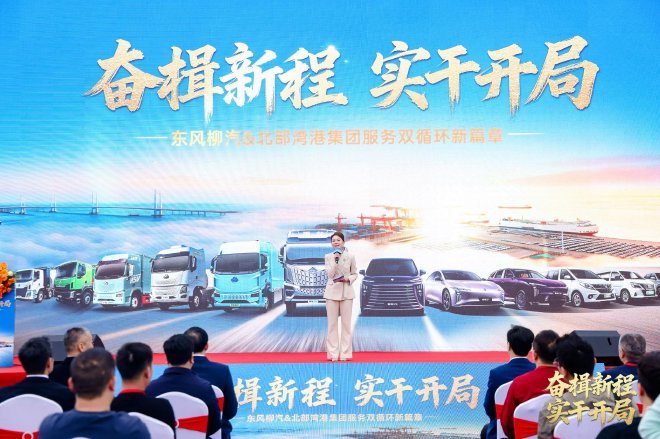
The event, held at the bustling Qinzhou Port, served as a powerful symbol of progress and determination. A theme film, "China Starts, We Start Work," captured the spirit of millions of workers contributing to the nation's economic growth. This collaborative effort between a major automaker and a key port operator underscores the commitment to streamlining operations and enhancing efficiency, something that Tesla has been doing for years with its Gigafactories.
Building a National Development Blueprint
The "dual circulation" strategy emphasizes strengthening domestic demand while maintaining international trade relationships. Dongfeng Liuzhou Motor, a significant player in both commercial and passenger vehicle manufacturing, exemplifies this approach. In 2025, the company achieved total terminal sales of 147,600 vehicles, with overseas exports exceeding 56,000, according to Sina Auto. This demonstrates a commitment to both domestic market dominance and international expansion, a strategy mirroring the ambitions of other Chinese automotive giants like BYD, which is rapidly gaining market share in Europe with its electric vehicles.
Beibu Gulf Port, with an annual ro-ro (roll-on/roll-off) ship throughput capacity of 372,000 vehicles, is poised to play a crucial role in facilitating this trade. The port's capacity to handle all-weather berthing of existing ro-ro ship types ensures a reliable and efficient export channel for Guangxi-manufactured goods. The port is actively working to optimize its "new three items" (electric vehicles, lithium batteries, and solar panels) transportation service system.
*
Considering importing a Chinese car? Navigating the language barrier can be tricky. Many of these vehicles come equipped with multimedia systems and menus primarily in Chinese. Don't let that hold you back!
We offer comprehensive localization services tailored for the Global / US / UK market, ensuring a seamless and enjoyable driving experience. Our services include:
* Multimedia & menu localization to English: We'll translate the entire infotainment system, making it easy to navigate and understand.
* App installation (Google Maps, Spotify, WhatsApp): Integrate your favorite apps for navigation, music, and communication.
* SIM card with unlimited mobile internet: Stay connected on the go with a reliable data connection.
* Voice assistant in English: Control your car's functions with simple voice commands.
* AI driving assistant: Get the most out of your car's advanced driver-assistance systems with an English-speaking AI.
Don't miss out on the innovative features and competitive pricing of Chinese cars. We'll help you bridge the language gap and enjoy a truly global driving experience.
Learn more → https://example.com/en
*
Own a Chinese car?
We localize multimedia systems, navigation, and voice assistants for BYD, NIO, Chery, Haval and 40+ brands. Your language, your country — fully adapted.
Get a free consultation →Strategic Partnerships and Product Launches
Dongfeng Liuzhou Motor solidified its commitment to collaboration by signing strategic cooperation agreements with Beibu Gulf Port Group, Guangxi Unicom, and Guangxi Shenglong Metallurgy. These partnerships aim to create a comprehensive industrial chain cooperation framework, streamlining operations and enhancing efficiency. A batch order signing of 300 vehicles with Guangxi Taihe Group, a local passenger transport company, further demonstrates the company's strong local market presence.
The event also saw the launch of two new scenario-based products: the Chenglong Yiwei 5 new energy tractor and the Dongfeng Fengxing Lingzhi PLUS business MPV. The Chenglong Yiwei 5, designed for port, factory, and resource transportation, boasts an ultra-low power consumption of 1.1 kWh/km and an extreme lightweight design of 8.8 tons. This electric tractor could be a direct competitor to the Volvo VNR Electric, offering a potentially more affordable and efficient alternative.
The Dongfeng Fengxing Lingzhi PLUS, a wide-body dual-side sliding door business MPV priced around 70,000 CNY (approximately $9,700 USD), targets small and micro-business owners. With a 5135mm ultra-long body, flexible seating layouts, and economical fuel consumption of 7.9L/100km, it aims to provide a versatile and affordable solution for business and family needs. This MPV could appeal to buyers looking for an alternative to the Ford Transit Connect or the Mercedes-Benz Metris, offering a more budget-friendly option.
Voice assistant in your language
AI-powered voice control that actually understands you. Works offline. Available for 50+ Chinese car models.
See our services →Intelligent Operations and Future Plans
The event culminated in an intelligent operation demonstration, showcasing the integration of "Automotive Intelligent Manufacturing + Port Logistics." An intelligent truck loaded containers in coordination with automated port equipment, highlighting the potential for increased efficiency and productivity. A ship carrying T5 EVO KD (knocked-down) parts containers departed for Cambodia, while a shipment of 47 Dongfeng Liuzhou Motor passenger cars (Xinghai S7, Xinghai V9, M4) is scheduled to depart for Jebel Ali Port in the United Arab Emirates.
Looking ahead, Dongfeng Liuzhou Motor plans to deepen its "commercial and passenger vehicle parallel" strategy, providing more intelligent and green transportation solutions. Beibu Gulf Port Group will focus on facilitating Guangxi's cargo exports, working with shipping companies and vehicle manufacturers to expand ro-ro business and improve port infrastructure. This collaboration aims to create a stable, efficient, and convenient logistics channel for the export of automobiles, construction machinery, and parts, helping "Made in China" products reach global markets through the New International Land-Sea Trade Corridor in western China.
FAQ
Q: What is the "dual circulation" strategy?
A: The "dual circulation" strategy is China's economic development model that emphasizes strengthening the domestic economy (the "internal circulation") while maintaining and expanding international trade and investment (the "external circulation"). The goal is to create a more resilient and self-reliant economy while remaining engaged in the global market.
Q: How are Chinese automotive brands like BYD, NIO, and XPeng impacting the global market?
A: Chinese automotive brands are rapidly gaining market share globally, particularly in the electric vehicle (EV) sector. Companies like BYD, NIO, and XPeng are known for their innovative technology, competitive pricing, and stylish designs. They are challenging established automakers and driving the transition to electric mobility.
Q: What are the key advantages of Chinese cars compared to traditional brands?
A: Chinese cars often offer a combination of advanced technology, competitive pricing, and innovative features. Many Chinese EVs boast impressive range, fast charging capabilities, and sophisticated driver-assistance systems. The lower price point can make them an attractive option for budget-conscious buyers. However, factors like brand recognition, after-sales service, and long-term reliability are still areas where traditional brands may have an advantage.