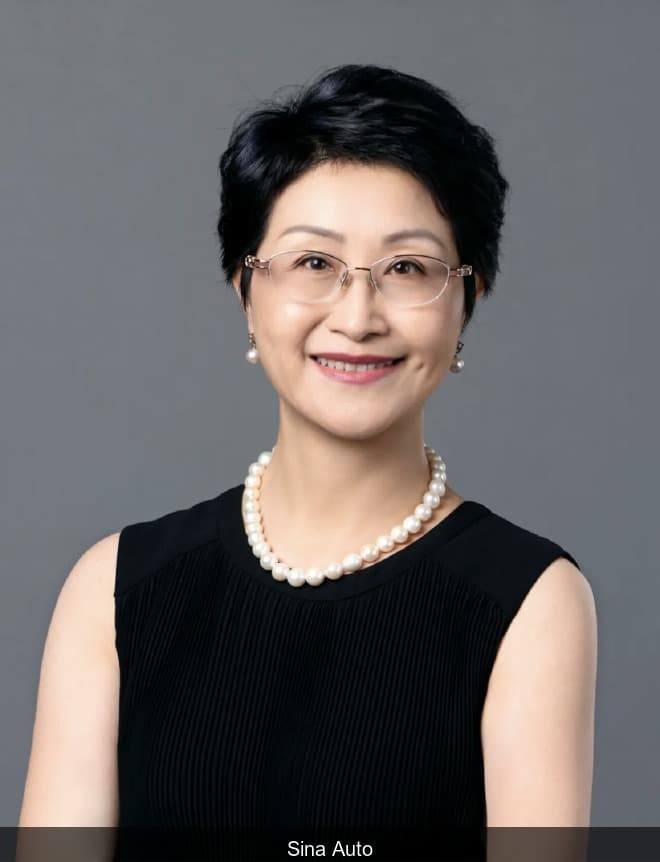
Ford China Leadership Change: Yang Meihong Retires
Ford China announces a leadership change in communications. Yang Meihong retires, Li Fangfang steps in. Read more about Ford's strategy!
Ford China Announces Leadership Change in Communications
Ford China has announced a significant shift in its leadership team, with Yang Meihong, Vice President of Communications and Corporate Social Responsibility, retiring at the end of March. Li Fangfang, currently Vice President of Communications and Public Affairs for Lincoln China, will step into the role on April 1st. This move signals Ford's continued commitment to navigating the rapidly evolving Chinese automotive market, where competition from local brands like BYD, NIO, XPeng, Li Auto, Geely, Chery, and Great Wall is intensifying.
Yang Meihong's Legacy
Yang Meihong's departure marks the end of a notable chapter for Ford in China. According to Ford, she is highly regarded within the industry and media. During her five-year tenure, she played a crucial role in promoting the Ford brand, particularly its "Unleash Your Nature, Go Wild" spirit. Wu Shengbo, Vice President of Ford Motor Company, President and CEO of Ford China and International Markets Group, praised her contributions, highlighting her deep understanding of the automotive landscape and her ability to maintain a strong brand presence amidst rapid changes in communication. Her 30 years of experience in the automotive industry have been invaluable to Ford's operations in China.
Li Fangfang Takes the Reins
Li Fangfang's appointment represents a strategic move to leverage her expertise in corporate communication and brand building. Prior to her role at Lincoln China, she gained experience at China Daily and various multinational automotive companies. Wu Shengbo expressed confidence in her ability to elevate Ford China's communication efforts, enhance its corporate reputation, and inject new vitality into the company's business development. Her three years at Lincoln China have already demonstrated her capabilities in navigating the unique challenges and opportunities of the Chinese market.

Own a Chinese car?
We localize multimedia systems, navigation, and voice assistants for BYD, NIO, Chery, Haval and 40+ brands. Your language, your country — fully adapted.
Get a free consultation →The Chinese Automotive Landscape: A Battleground
The Chinese automotive market is currently the largest and most dynamic in the world, with a growing number of domestic manufacturers challenging established global brands. Companies like BYD, NIO, XPeng, Li Auto, Geely, Chery, and Great Wall are making significant strides in electric vehicle (EV) technology, autonomous driving, and overall vehicle quality. These brands are increasingly appealing to Chinese consumers, often offering competitive pricing and features that cater specifically to local preferences. For example, BYD's Qin Plus DM-i offers a plug-in hybrid powertrain with a range of over 745 miles (1200 km) and a starting price of around $15,000, undercutting many comparable models from Western manufacturers. This intense competition forces companies like Ford to constantly innovate and adapt their strategies to remain relevant.
Navigating the Challenges
One of the key challenges for foreign automakers in China is adapting their vehicles and services to meet the specific needs of the Chinese market. This includes everything from infotainment systems and connectivity features to vehicle design and driving characteristics. Furthermore, the regulatory environment in China is constantly evolving, requiring companies to stay informed and compliant with the latest policies.
*
Thinking of importing a Chinese car to the US or UK? Or perhaps you're a manufacturer looking to expand your reach? One often-overlooked aspect is localization. It's not just about translating the owner's manual; it's about creating a seamless and intuitive user experience for drivers in English-speaking markets.
Consider this: many Chinese cars come equipped with advanced features like multimedia systems, sophisticated driver-assistance technologies, and even AI-powered voice assistants. To truly resonate with global audiences, these features need to be perfectly localized.
That's why services like multimedia and menu localization to English are crucial. Imagine trying to navigate a complex infotainment system with poorly translated menus – it's a recipe for frustration! Similarly, ensuring that essential apps like Google Maps, Spotify, and WhatsApp are seamlessly integrated is essential for modern drivers.
Furthermore, a local SIM card with unlimited mobile internet can unlock a world of connectivity, allowing drivers to access real-time traffic updates, streaming services, and other online features. And let's not forget the importance of a voice assistant that understands and responds to English commands, making driving safer and more convenient.
Finally, an AI driving assistant that speaks fluent English can provide valuable support and guidance on the road, enhancing the overall driving experience.
Learn more → https://example.com/en
*

Ford's Strategy in China
Ford's strategy in China involves a multi-pronged approach, focusing on electric vehicles, connected car technology, and localization. The company is investing heavily in EV development and plans to introduce a range of electric models specifically designed for the Chinese market. Ford is also working to enhance its connectivity features, offering services such as over-the-air software updates and remote vehicle control. A key example is the Ford Mustang Mach-E, which is produced locally in China and offers a compelling blend of performance and technology. The extended range version boasts a CLTC range of over 370 miles (600 km) and a starting price of around $45,000. This positions it competitively against rivals like the Tesla Model Y and the NIO ES6.
Voice assistant in your language
AI-powered voice control that actually understands you. Works offline. Available for 50+ Chinese car models.
See our services →The Future of Ford China
With Li Fangfang at the helm of communications and corporate social responsibility, Ford China is poised to navigate the challenges and opportunities of the Chinese automotive market. Her experience and expertise will be crucial in shaping the company's brand image, communicating its strategy to stakeholders, and fostering positive relationships with the media and the public. The success of Ford in China will depend on its ability to adapt to the evolving needs of Chinese consumers and compete effectively against both established global brands and emerging domestic players. The rise of Chinese cars, including EVs from BYD, NIO, XPeng, Li Auto, Geely, Chery, and Great Wall, is undeniable, and Ford must continue to innovate and adapt to maintain its position in this critical market.
FAQ
Q: Are Chinese cars like BYD, NIO, and XPeng coming to the US and UK?
A: While some Chinese brands like BYD are exploring opportunities in the US and UK markets, widespread availability is still limited. Regulatory hurdles, import tariffs, and the need to establish robust sales and service networks are all factors that need to be addressed. However, the increasing competitiveness of Chinese EVs suggests that they will likely play a more significant role in global markets in the coming years.
Q: How do Chinese EVs compare to established brands like Tesla and Ford?
A: Chinese EVs are rapidly catching up in terms of technology, performance, and range. Brands like NIO and XPeng offer vehicles with comparable or even superior features to Tesla and Ford in some areas, such as battery technology and autonomous driving capabilities. Furthermore, Chinese EVs often offer more competitive pricing, making them an attractive option for budget-conscious consumers.
Q: What are the key challenges for foreign automakers in the Chinese market?
A: The Chinese automotive market is highly competitive and rapidly evolving. Foreign automakers face challenges such as adapting their vehicles and services to meet the specific needs of Chinese consumers, navigating the complex regulatory environment, and competing against a growing number of domestic manufacturers. Localization, innovation, and a strong understanding of local market trends are essential for success.