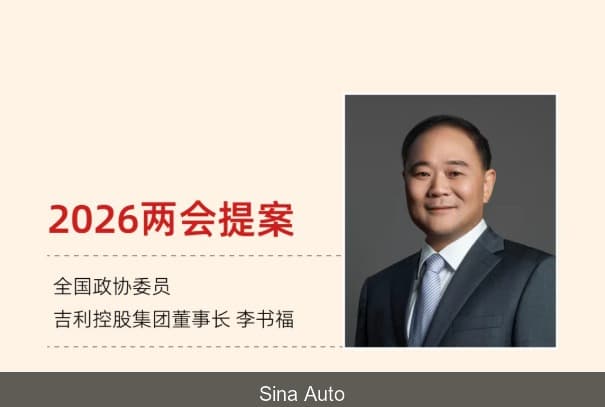
Geely's Li Shufu: Green Transport & Intelligent Vehicles
Geely Chairman Li Shufu proposes green transport, intelligent vehicle education, and accessible transport in China. Read more now!
Geely Chairman Li Shufu Pushes for Green Transport, Intelligent Vehicle Education, and Accessibility in China
Li Shufu, Chairman of Geely Holding Group, has proposed significant changes to China's automotive landscape, focusing on methanol-powered trucks, intelligent vehicle education, and accessible transportation. As a member of the 14th National Committee of the CPPCC, Li's proposals aim to modernize the industry and improve the lives of Chinese citizens. His proposals, presented at the 2026 National People's Congress (NPC) and Chinese People's Political Consultative Conference (CPPCC), cover three key areas: green transportation, intelligent vehicle discipline construction, and barrier-free travel.
Methanol Electric Trucks: A Green Solution for China's Logistics
China's freight sector is dominated by road transportation, accounting for 73.6% of the over 56 billion tons transported in 2024, according to Sina Auto. However, this reliance on diesel-powered trucks contributes significantly to pollution and carbon emissions. Li Shufu proposes a shift towards methanol electric commercial trucks as a cleaner alternative, particularly for medium- and long-distance routes.
Methanol electric trucks offer several advantages, including lower emissions, cost-effectiveness, and suitability for colder climates where battery performance can be compromised. Li suggests prioritizing the adoption of these trucks in the transportation sector, deploying methanol refueling infrastructure along major logistics routes, and creating green freight corridors. This initiative aims to reduce carbon emissions while maintaining transportation capacity and economic viability.
Think of it like this: while the US and Europe are pushing hard on full electric semi-trucks from Tesla and Volvo, China is looking at methanol as a potential bridge fuel, or even a long-term solution. Methanol refueling is much faster than charging, which is a major advantage for long-haul trucking.
Own a Chinese car?
We localize multimedia systems, navigation, and voice assistants for BYD, NIO, Chery, Haval and 40+ brands. Your language, your country — fully adapted.
Get a free consultation →Intelligent Electric Vehicles: Building a Future-Ready Workforce
The rapid growth of the intelligent connected new energy vehicle (ICNEV) sector in China, spearheaded by companies like BYD, NIO, XPeng, and Li Auto, faces a critical bottleneck: a shortage of skilled talent. The current education system struggles to keep pace with the interdisciplinary nature of ICNEV technology, leading to a mismatch between training and industry needs.
Li proposes establishing a first-level interdisciplinary subject of "Intelligent Electric Vehicles" in Chinese universities. This new discipline would integrate knowledge from various fields, such as automotive engineering, computer science, and artificial intelligence, to cultivate a workforce capable of driving innovation in the ICNEV sector. He suggests the Ministry of Education should formally establish this discipline in the "Graduate Education Discipline and Professional Catalog" by 2027.
The goal is to create a pipeline of engineers and researchers who can compete with the best in the world, ensuring that Chinese car brands like Geely, Chery, and Great Wall remain at the forefront of automotive technology. This is similar to the push for STEM education in the US and the UK, but with a specific focus on the unique challenges and opportunities presented by electric and intelligent vehicles.

NATIVE ADVERTISING
Thinking about importing or adapting your Chinese car for the Global / US / UK market? One often-overlooked aspect is localization. The infotainment system, apps, and even the voice assistant need to speak the language of your customers.
That's where specialized localization services come in. They can handle everything from multimedia and menu translation to English, ensuring a seamless user experience. They can also install essential apps like Google Maps, Spotify, and WhatsApp, which are often missing from Chinese market vehicles. A local SIM card with unlimited mobile internet is a must-have for connected car features. And perhaps most importantly, they can adapt the voice assistant and AI driving assistant to understand and respond to English commands.
These services are crucial for making Chinese cars appealing and user-friendly to a global audience. It's an investment that can significantly improve customer satisfaction and brand perception.
Learn more → https://example.com/en
Accessible Transportation: Ensuring Mobility for All
Barrier-free travel is becoming increasingly important in China, driven by an aging population and growing awareness of the rights of people with disabilities. However, many cities lack adequate barrier-free taxi services, making it difficult for elderly and disabled individuals to access transportation.
Li proposes a comprehensive plan to promote urban barrier-free taxi service systems. This includes national-level policy guidance and standard construction, diversified funding support mechanisms, operational model innovation and digital transformation, strengthened driver training and service system construction, and encouragement of vehicle technology research and development.
For example, he suggests establishing a special fund for barrier-free transportation, jointly funded by the central and local governments, to subsidize vehicle purchases and operating costs. He also advocates for data interconnection between barrier-free travel platforms and mainstream ride-hailing apps, enabling one-click car hailing and intelligent dispatch. This is similar to the efforts to improve accessibility in public transportation in cities like London and New York, but with a specific focus on the unique challenges of the Chinese context.
The BYD D1, designed specifically for ride-hailing, could be a good starting point for developing accessible taxis, with modifications to accommodate wheelchairs and other mobility devices. The price of a D1 is around $20,000, making it a relatively affordable option for taxi fleets.
Voice assistant in your language
AI-powered voice control that actually understands you. Works offline. Available for 50+ Chinese car models.
See our services →Specific Data Points
* Road Transportation Volume (2024): 56 billion tons, with road transportation accounting for 73.6%.
* Road Transportation Market Size (2024): Approximately CNY 4.3 trillion (roughly $600 billion USD).
* BYD D1 Price: Around $20,000 USD.
FAQ
Q: Why is China focusing on methanol electric trucks instead of fully electric trucks like Tesla Semi?
A: Methanol offers faster refueling times compared to charging, which is crucial for long-haul trucking. It also performs better in cold climates where battery performance can be compromised. China sees it as a potential bridge fuel or long-term solution.
Q: What are the key benefits of establishing a first-level interdisciplinary subject of "Intelligent Electric Vehicles"?
A: It addresses the shortage of skilled talent in the ICNEV sector by providing a comprehensive education that integrates knowledge from various fields. This ensures that Chinese car brands like NIO and XPeng remain competitive in the global market.
Q: How will the proposed barrier-free taxi service system improve accessibility for elderly and disabled individuals in China?
A: The plan includes national-level policy guidance, funding support, operational model innovation, and driver training. This will increase the availability of accessible taxis and make it easier for elderly and disabled individuals to access transportation.