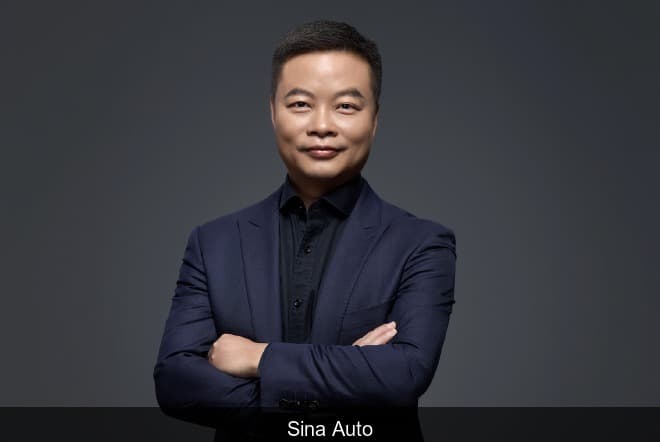
XPeng CEO: Flying Cars, L4 Autonomy for China
XPeng CEO proposes flying cars, L4 autonomy, & humanoid robots in China. Read about his ambitious tech plans and China's automotive future!
XPeng CEO Pushes for Flying Cars, L4 Autonomy, and Humanoid Robots in China
He Xiaopeng, Chairman and CEO of XPeng Motors, has proposed ambitious plans to the National People's Congress (NPC) in China, focusing on the development of flying cars, Level 4 autonomous driving, and advanced humanoid robots. These proposals highlight China's ambition to lead in future technologies, particularly in areas where Chinese car companies like BYD, NIO, Li Auto, Geely, Chery, and Great Wall are already making significant strides.
Flying Cars: Clearing the Airspace for Takeoff
The Chinese government is eyeing the "low-altitude economy" as a strategic emerging industry, and XPeng is keen to capitalize on this with its flying car initiatives. Currently, airspace approval is heavily centralized, hindering innovation and market access. He Xiaopeng suggests decentralizing airspace management, creating a collaborative system involving the military, local governments, and the public. He proposes pilot projects in regions with established low-altitude industries to test refined airspace management.
The lack of clear tax classifications for flying cars also poses a challenge. XPeng is advocating for phased tax reductions and exemptions to encourage R&D, production, and sales. This approach mirrors the incentives that helped propel the electric vehicle market in China, benefiting companies like BYD and NIO. Imagine a future where your daily commute involves bypassing gridlocked highways in a personal aerial vehicle – a concept that's closer to reality in China than many might think.
Own a Chinese car?
We localize multimedia systems, navigation, and voice assistants for BYD, NIO, Chery, Haval and 40+ brands. Your language, your country — fully adapted.
Get a free consultation →Autonomous Driving: Leaping from L2 to L4
China already holds a strong position in Level 2 (L2) driver-assistance systems, but XPeng wants to accelerate the transition to Level 4 (L4) autonomous driving. The current "graded and progressive" approach, with its intermediate L3 stage, is seen as a bottleneck. XPeng argues for a direct leap from L2 to L4, streamlining regulations and fostering faster technological iteration. This echoes the sentiment that Chinese car manufacturers are not content with simply catching up; they aim to leapfrog the competition.
To achieve this, XPeng proposes clarifying registration and traffic management for L4 vehicles, gradually allowing compliant road access nationwide. They also suggest conducting traffic law applicability assessments to adapt regulations to the unique behavior of autonomous driving systems. Furthermore, XPeng advocates granting local pilot management rights for consumer-facing L4 applications in specific scenarios, such as unmanned parking and car washing. This localized approach allows for rapid experimentation and adaptation, similar to how Tesla has deployed its Full Self-Driving (FSD) beta program in the US.
Native Advertising Block
Thinking about importing your shiny new Chinese EV, maybe a sleek XPeng P7 or a robust BYD Tang? Navigating the infotainment system and getting all your favorite apps working seamlessly in English can be a challenge. That's where specialized localization services come in.
Imagine having your car's multimedia system and menus fully translated into English, complete with familiar terminology and user-friendly interfaces. Picture effortlessly installing Google Maps, Spotify, and WhatsApp, ensuring you stay connected and entertained on the go. And what about a local SIM card with unlimited mobile internet, allowing you to stream music, navigate with real-time traffic updates, and stay in touch with friends and family without worrying about data limits?
Even better, envision a voice assistant that understands your commands in English and an AI driving assistant that provides helpful guidance and support in your native language. These services are designed to make your experience with Chinese cars as smooth and enjoyable as possible, bridging the language gap and unlocking the full potential of these innovative vehicles.
Learn more → https://example.com/en
Voice assistant in your language
AI-powered voice control that actually understands you. Works offline. Available for 50+ Chinese car models.
See our services →Humanoid Robots: Building the "Edge-Side Brain"
Beyond cars, XPeng is also investing in humanoid robots, viewing them as a key component of the "embodied intelligence" industry. He Xiaopeng emphasizes the importance of developing "edge-side local brain" capabilities, enabling robots to perform autonomous perception, decision-making, and execution. This approach, driven by large physical world models, is seen as more conducive to real-world applications in industrial, commercial, and even home settings.
XPeng is advocating for targeted R&D incentives, such as a national-level special research and development fund, to support the development of high-level intelligent humanoid robots. They also propose establishing intelligent standards for humanoid robots, similar to the autonomous driving grading standards in the automotive industry. This would provide a unified framework for technology development, industrial deployment, and industry supervision. The goal is to position China as a global leader in humanoid robot technology, much like it aims to be in the electric vehicle market, where companies like Geely and Chery are rapidly expanding their global presence.
FAQ
Q: Will flying cars actually become a reality in China?
A: According to XPeng's proposals, the Chinese government is taking the low-altitude economy seriously. While regulatory hurdles remain, the potential for government support and investment suggests that flying cars could become a viable transportation option in certain areas of China within the next decade.
Q: How does China's approach to autonomous driving differ from that of the US or Europe?
A: China is aiming for a more rapid deployment of L4 autonomous driving, potentially skipping the intermediate L3 stage. This aggressive approach is driven by a desire to gain a competitive advantage in the global market, and it may involve a more centralized regulatory framework compared to the US or Europe.
Q: What are the main challenges facing the development of humanoid robots in China?
A: One of the key challenges is developing the "edge-side brain" capabilities that enable robots to perform autonomous perception, decision-making, and execution. This requires significant investment in R&D, data collection, and computing power. Establishing industry standards and addressing ethical concerns are also important considerations.