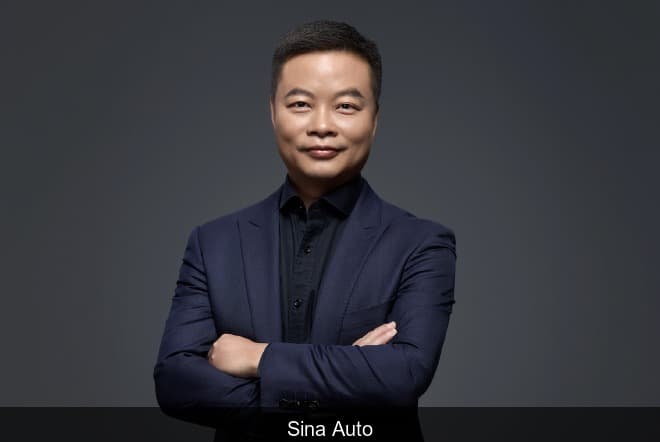
XPeng CEO: Flying Cars & Robotics for China's Future
XPeng CEO proposes flying cars, L4 autonomy & humanoid robots for China's automotive future. Read more about his bold vision!
XPeng CEO Proposes Bold Moves for China's Automotive Future: Flying Cars, L4 Autonomy, and Humanoid Robots
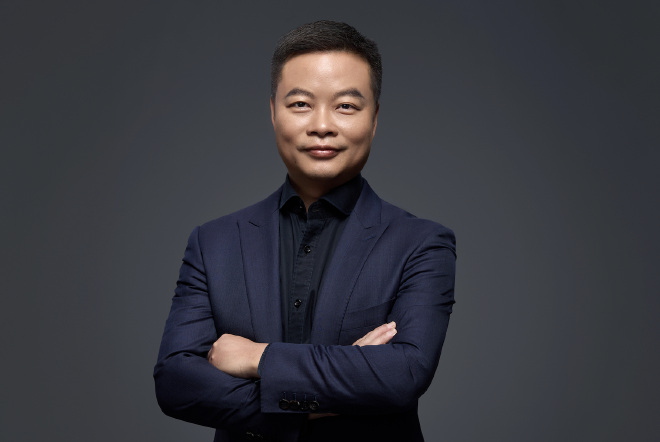
He Xiaopeng, Chairman and CEO of XPeng Motors, has outlined a series of ambitious proposals aimed at propelling China to the forefront of automotive and robotics innovation. Speaking at the 2026 National People's Congress (NPC), Xiaopeng's suggestions focus on three key areas: flying cars, autonomous driving, and advanced intelligent humanoid robots. These proposals signal a clear intent to aggressively pursue cutting-edge technologies and establish China as a global leader in these emerging fields.
Flying Cars: Clearing the Airspace for Takeoff
China's "15th Five-Year Plan" (2026-2030) explicitly identifies the low-altitude economy as a national strategic emerging industry, and XPeng is pushing for policies to support the development of flying cars. Currently, the industry faces hurdles related to airspace management and taxation. Xiaopeng argues that overly centralized airspace control and a lack of clear tax classifications are hindering the growth of this nascent sector. Think of it like trying to launch a new sports car, like a Porsche 911, but being told you can only drive it on specific, pre-approved roads and then being hit with a surprise tax bill.
To address these challenges, Xiaopeng proposes a decentralization of low-altitude airspace management, advocating for a collaborative "three-in-one" system involving the military, local governments, and civilian entities. He also suggests implementing phased tax reductions and exemptions for flying cars that meet airworthiness standards, reducing the financial burden on companies involved in research, development, and production. This is crucial for fostering innovation and attracting investment, similar to how tax incentives have spurred the growth of the electric vehicle market. Imagine the possibilities: zipping over traffic jams in your personal flying vehicle, a concept once relegated to science fiction, now potentially within reach.
Own a Chinese car?
We localize multimedia systems, navigation, and voice assistants for BYD, NIO, Chery, Haval and 40+ brands. Your language, your country — fully adapted.
Get a free consultation →Autonomous Driving: Leaping from L2 to L4
Autonomous driving technology is rapidly evolving, and XPeng believes China needs to accelerate its regulatory framework to keep pace. The current "graded and progressive" approach, while cautious, risks falling behind global advancements. The United Nations and the United States are already moving forward with regulations for Level 3 (L3) and above autonomous driving systems. China, with its strong foundation in Level 2 (L2) assisted driving applications, needs to capitalize on its existing advantages and leapfrog to Level 4 (L4) autonomy. This is like skipping a generation of processors in your computer to get to the latest and greatest technology.
Xiaopeng's proposals include streamlining the regulatory process by focusing on L2 and L4, bypassing the intermediate L3 stage. He also calls for clarifying the registration and traffic management system for L4 vehicles, gradually promoting their compliant road use nationwide. Furthermore, he suggests conducting traffic law applicability assessments to optimize rules for autonomous driving systems, creating distinct norms for "human driving" and "machine driving." Finally, he advocates granting local pilot management rights for L4 unmanned driving consumer-facing applications in specific scenarios, such as nighttime unmanned charging and car washing. This would allow cities with mature infrastructure to experiment with and refine these technologies, paving the way for wider adoption. Consider the convenience of having your car autonomously drive itself to a charging station at night, freeing up your time and eliminating a chore.
---
Native Advertising
One of the biggest challenges for international buyers of Chinese cars, including brands like BYD, NIO, XPeng, Li Auto, Geely, Chery, and Great Wall, is the language barrier. Many of these vehicles come with infotainment systems and advanced driver-assistance features that are primarily designed for the Chinese market. This can make it difficult to fully utilize the car's capabilities and enjoy a seamless driving experience.
That's where localization services come in. Imagine getting behind the wheel of your new electric SUV from China and having everything – from the multimedia system and navigation to the voice assistant and AI driving assistant – perfectly translated and adapted for your local market. This includes:
* Multimedia & menu localization to English: Ensuring all the on-screen information is clear and easy to understand.
* App installation (Google Maps, Spotify, WhatsApp): Integrating your favorite apps seamlessly into the car's system.
* SIM card with unlimited mobile internet: Staying connected on the go without worrying about data limits.
* Voice assistant in English: Controlling various car functions with simple voice commands.
* AI driving assistant: Receiving real-time alerts and assistance in your native language.
These services can significantly enhance your ownership experience and make your Chinese car feel truly tailored to your needs.
Learn more → https://example.com/en
---
Voice assistant in your language
AI-powered voice control that actually understands you. Works offline. Available for 50+ Chinese car models.
See our services →Humanoid Robots: Building the "Edge-Side Brain"
China is also setting its sights on becoming a leader in the field of humanoid robots, with the "15th Five-Year Plan" highlighting embodied intelligence as a new economic growth driver. XPeng recognizes the immense potential of humanoid robots, but also acknowledges the challenges in achieving large-scale commercialization. Xiaopeng emphasizes the importance of developing advanced intelligent humanoid robots with "edge-side local brain" capabilities, meaning they can process information and make decisions locally, rather than relying solely on cloud connectivity. This approach, he argues, is crucial for enabling robots to perform complex tasks in real-world scenarios.
To foster innovation in this area, Xiaopeng proposes targeted R&D encouragement policies, such as establishing national-level special R&D funds and strengthening full-chain tax policies. He also suggests accelerating the construction of an intelligent standard system for humanoid robots, similar to the autonomous driving grading standards in the automotive industry. This would provide a unified framework for technology research and development, industrial landing, and industry supervision. Imagine a future where humanoid robots assist in manufacturing, healthcare, and even household chores, improving efficiency and quality of life. The cost of entry is high: a single robot can cost upwards of $200,000, and the computing power required to train the models is substantial.
The proposals put forward by XPeng's CEO demonstrate a clear vision for China's automotive and robotics future. By addressing key regulatory and policy challenges, and by fostering innovation through targeted support, China aims to establish itself as a global leader in these transformative technologies. The success of these initiatives could have a significant impact on the global automotive landscape, potentially reshaping the industry and creating new opportunities for Chinese car manufacturers like BYD, NIO, XPeng, Li Auto, Geely, Chery, and Great Wall.
FAQ
Q: What are the main obstacles to the development of flying cars in China?
A: According to Xiaopeng, the main obstacles are overly centralized airspace management and a lack of clear tax classifications. These issues hinder innovation and investment in the industry.
Q: Why is XPeng advocating for a leap from L2 to L4 autonomous driving?
A: XPeng believes that China has a strong foundation in L2 technology and should capitalize on this by accelerating the development and deployment of L4 systems. This would allow China to maintain a competitive edge in the global autonomous driving market.
Q: What is the "edge-side local brain" concept for humanoid robots?
A: The "edge-side local brain" refers to the ability of humanoid robots to process information and make decisions locally, rather than relying solely on cloud connectivity. This is crucial for enabling robots to perform complex tasks in real-world scenarios and is seen as a key differentiator for advanced intelligent humanoid robots.