XPeng Deliveries Surge: New EV Launch & Tech Updates
XPeng reports strong February deliveries and prepares to launch the 2026 X9 MPV with autonomous driving updates. Read more about XPeng's advancements!
XPeng Kicks Off March with Strong Delivery Numbers and Tech Advancements
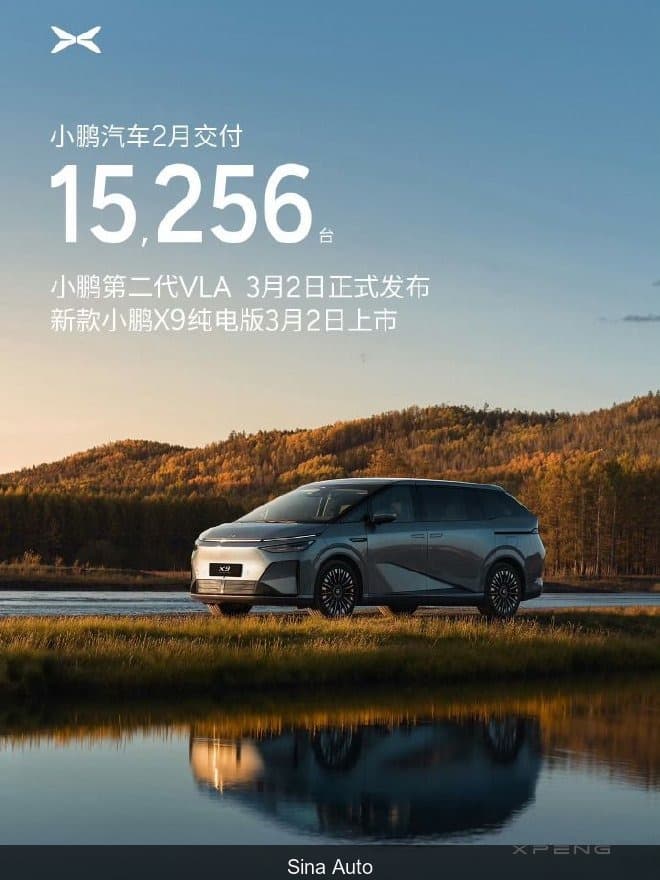
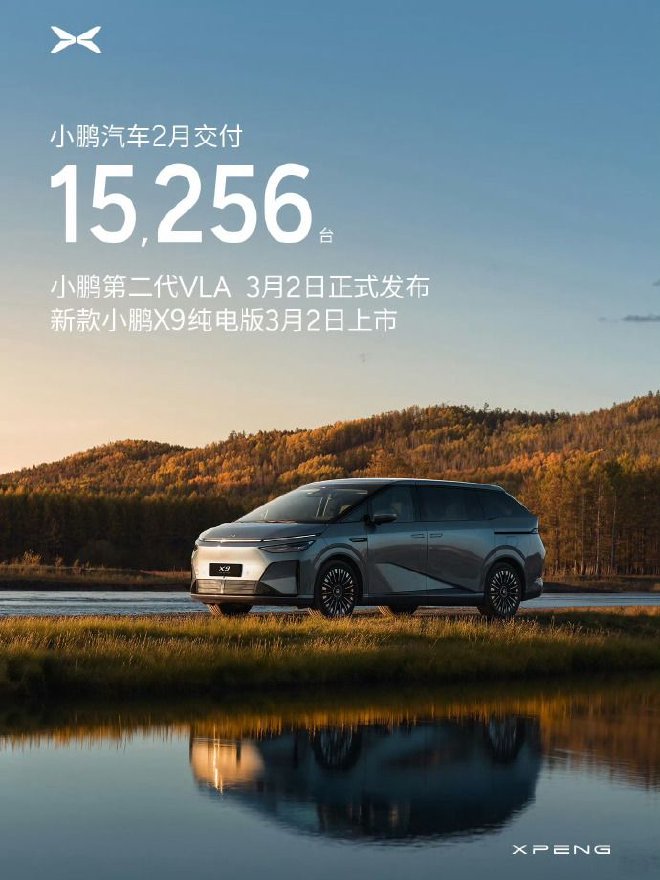
XPeng Motors delivered a total of 15,256 new vehicles in February 2026, signaling a strong start to the year for the Chinese EV manufacturer. This news comes as the company prepares to officially launch the 2026 XPeng X9 all-electric MPV and roll out its second-generation VLA (Vehicle Location Algorithm), an autonomous driving update, throughout March. The rise of Chinese cars like XPeng, BYD, NIO, Li Auto, Geely, Chery, and Great Wall is becoming increasingly difficult to ignore, even for established players in the US and UK markets.
The February delivery numbers represent a significant achievement for XPeng, especially considering the challenges often associated with the Lunar New Year holiday period, which typically sees a slowdown in sales across China. While specific breakdown of models delivered wasn't immediately available, the XPeng X9 is expected to contribute significantly to future sales figures. The X9, a large, all-electric MPV, aims to redefine the family vehicle segment, offering a blend of luxury, technology, and practicality that could appeal to a broad range of buyers.
XPeng's commitment to innovation is further demonstrated by the upcoming rollout of its second-generation VLA. This autonomous driving update promises to enhance the capabilities of XPeng vehicles, potentially offering features such as improved lane keeping, adaptive cruise control, and even limited self-driving capabilities in certain conditions. The company is investing heavily in research and development to stay at the forefront of autonomous driving technology, a key differentiator in the increasingly competitive EV market.
Navigating the Chinese EV Landscape: A Local's Perspective
The influx of Chinese EVs like those from XPeng, BYD, and NIO into the global market is exciting, but it also presents some unique challenges for international consumers. One of the biggest hurdles is often the language barrier and the integration of services that are popular in the US and UK. Many of these vehicles are initially designed with the Chinese market in mind, meaning the infotainment systems, voice assistants, and even the apps available can be geared towards a Chinese-speaking audience.
That's where specialized localization services come in. Imagine getting behind the wheel of a brand-new XPeng X9, only to find that the navigation system is difficult to use because it's primarily in Chinese. Or that your favorite music streaming app isn't available.
To fully enjoy the experience of owning a cutting-edge Chinese EV, consider these essential localization services:
* Multimedia & menu localization to English: A seamless transition to English throughout the car's interface.
* App installation (Google Maps, Spotify, WhatsApp): Access to the apps you rely on every day.
* SIM card with unlimited mobile internet: Stay connected on the go.
* Voice assistant in English: Control your car with your voice, in your language.
* AI driving assistant: Enhanced safety and convenience with AI-powered features.
These services aren't just about convenience; they're about safety and ensuring you can fully utilize the advanced technology these vehicles offer. Think of it as unlocking the full potential of your new Chinese EV.
Learn more → https://example.com/en
Own a Chinese car?
We localize multimedia systems, navigation, and voice assistants for BYD, NIO, Chery, Haval and 40+ brands. Your language, your country — fully adapted.
Get a free consultation →XPeng X9: A Challenger to the Status Quo?
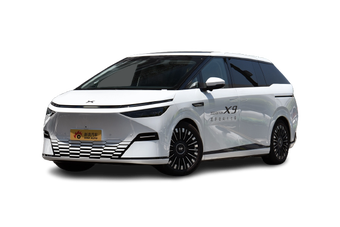
The 2026 XPeng X9 is poised to make waves in the MPV segment, a market traditionally dominated by vehicles like the Chrysler Pacifica in the US or the Volkswagen Multivan in Europe. However, the X9 brings a unique proposition to the table: all-electric power, cutting-edge technology, and a sleek, modern design.
While official pricing for the 2026 model hasn't been released, industry analysts estimate a starting price of around $50,000 USD, positioning it competitively against other premium EVs. The X9 is expected to offer a range of over 400 miles (640 km) on a single charge, according to XPeng's internal testing, making it a viable option for long-distance travel. Furthermore, the X9 boasts a spacious interior with seating for up to seven passengers, making it ideal for families.
The Broader Context: Chinese EVs Gaining Traction
XPeng's success is part of a larger trend: the growing influence of Chinese EV manufacturers in the global automotive market. Companies like BYD, NIO, Li Auto, Geely, Chery, and Great Wall are all investing heavily in electric vehicle technology and expanding their presence overseas. BYD, for example, is already selling its electric vehicles in several European countries and is planning to enter the US market in the coming years. NIO is known for its innovative battery swapping technology and its focus on luxury EVs. Li Auto specializes in extended-range electric vehicles (EREVs), which combine an electric powertrain with a gasoline engine to provide longer driving ranges.
These companies are not just competing on price; they are also pushing the boundaries of technology, design, and performance. They are challenging the established automakers from the US, Europe, and Japan, and they are forcing them to innovate faster. The rise of Chinese EVs is transforming the automotive industry, and it is creating new opportunities for consumers around the world. According to a recent report by BloombergNEF, Chinese automakers are expected to account for over 30% of global EV sales by 2030.
Voice assistant in your language
AI-powered voice control that actually understands you. Works offline. Available for 50+ Chinese car models.
See our services →VLA: XPeng's Autonomous Driving Ambitions
The rollout of XPeng's second-generation VLA is a significant step towards achieving its autonomous driving ambitions. While the company has not yet released full details about the new system, it is expected to offer a range of advanced driver-assistance features, including enhanced lane keeping, adaptive cruise control, and automatic emergency braking. XPeng is also working on developing more advanced autonomous driving capabilities, such as self-parking and highway autopilot. The company is investing heavily in artificial intelligence, sensor technology, and mapping to achieve its goals.
The VLA system will likely rely on a combination of cameras, radar, and lidar sensors to perceive the environment around the vehicle. It will also use advanced algorithms to process the sensor data and make decisions about how to control the vehicle. XPeng is committed to ensuring the safety and reliability of its autonomous driving systems, and it is conducting extensive testing and validation to ensure that they meet the highest standards.
FAQ
Here are some frequently asked questions about Chinese EVs and their impact on the global market:
Q: Are Chinese EVs safe?
A: Yes, Chinese EVs are generally safe. They are subject to the same safety standards and regulations as vehicles from other countries. Many Chinese EV manufacturers are investing heavily in safety technology and are conducting rigorous testing to ensure that their vehicles meet the highest safety standards. However, it's always a good idea to research specific models and their safety ratings before making a purchase.
Q: Are Chinese EVs reliable?
A: Reliability can vary depending on the manufacturer and model. However, many Chinese EV manufacturers are making significant strides in improving the reliability of their vehicles. As with any new technology, there may be some teething problems, but overall, Chinese EVs are becoming increasingly reliable. Look for brands with established service networks and positive owner reviews.
Q: Will Chinese EVs be available in the US and UK?
A: Yes, many Chinese EV manufacturers are planning to expand their presence in the US and UK markets. Some companies, like BYD, are already selling their vehicles in Europe and are expected to enter the US market in the coming years. However, there may be some regulatory hurdles and trade barriers that need to be overcome before Chinese EVs become widely available in these markets. Keep an eye on industry news and announcements for the latest developments.