XPeng Level 4 Autonomy: A Leap Ahead or Just Hype?
XPeng claims it's skipping Level 3 for Level 4 autonomy. Is it possible? Read our analysis and find out if they can deliver!
XPeng Aims to Leapfrog to Level 4 Autonomy: A Bold Claim or the Future of Driving?
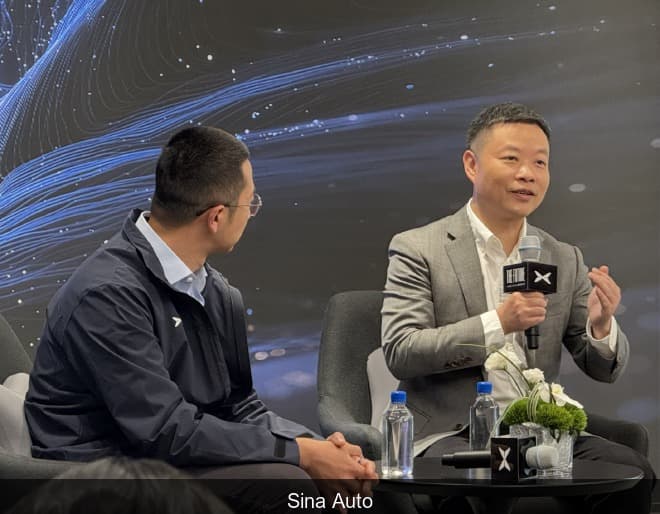
Chinese cars are rapidly evolving, and XPeng is making some bold claims about the future of autonomous driving. Founder He Xiaopeng and General Intelligence Center head Liu Xianming recently sat down with the media to discuss their second-generation VLA (Vision, Language, Action) system, a technology they believe will propel them past Level 3 autonomy and straight into the realm of Level 4. But can they deliver on this promise, and what does it mean for the future of driving, both in China and globally?
XPeng is betting big on skipping Level 3 autonomy altogether. He Xiaopeng argues that Level 3, with its conditional automation requiring driver intervention, presents a complex challenge from a hardware, software, and regulatory perspective. He believes the industry is better served by focusing on Level 2 (advanced driver-assistance systems or ADAS) and then making a direct leap to Level 4, where the vehicle can handle most driving situations without human input. This echoes a sentiment shared by some in the industry who see Level 3 as a technological dead end.
The second-generation VLA will be rolled out across XPeng's "Ultra" and "Ultra SE" models. This means XPeng will offer two tiers of autonomous driving capability: a basic ADAS package and a top-tier, more advanced system powered by the VLA. This strategy mirrors Tesla's approach, offering varying levels of "Autopilot" functionality. XPeng's strategy is similar to the approach taken by other Chinese EV manufacturers like NIO, Li Auto, BYD, Geely, Chery, and Great Wall, who are all investing heavily in autonomous driving technology.
While XPeng isn't yet claiming full Level 4 capability, they are confident they're on the right track. Liu Xianming describes VLA 2.0 as a "very general and efficient architecture" that is constantly evolving. He predicts a "relatively complete L4-level system" within 1 to 3 years, driven by rapid iteration and an accelerating data scale. This ambitious timeline puts XPeng in direct competition with companies like Waymo and Cruise, who are already testing fully autonomous vehicles in limited areas.
Navigating the Chinese EV Landscape: More Than Just Autonomous Driving
The Chinese EV market is a hotbed of innovation, with companies like BYD, NIO, Li Auto, Geely, Chery, and Great Wall all vying for dominance. While XPeng is focused on autonomous driving, other manufacturers are excelling in different areas. BYD, for example, is a leader in battery technology and offers a wide range of affordable EVs. NIO is known for its premium EVs and battery-swapping technology. Li Auto focuses on extended-range EVs with range extender technology. Geely, Chery, and Great Wall are established automakers with a growing presence in the EV market.
The XPeng P7, for example, is a direct competitor to the Tesla Model 3. The P7 boasts a sleek design, a long range (up to 706 km CLTC), and advanced technology. Pricing starts around $30,000 USD, making it a compelling option for buyers looking for a Tesla alternative. Similarly, the XPeng G9 SUV is positioned as a rival to the Tesla Model Y, offering a spacious interior, luxurious features, and fast charging capabilities.
Seamless Integration: The Key to a Superior Driving Experience
One of the key trends in the automotive industry is the integration of the intelligent cockpit and autonomous driving systems. XPeng has reorganized its structure to reflect this trend, creating a General Intelligence Center to oversee both areas. He Xiaopeng believes that the automotive field is rapidly moving towards "cross-domain integration," where autonomous driving, the intelligent cockpit, the powertrain, and the chassis are all seamlessly integrated. This integration, he argues, will lead to faster, safer, and more agile vehicles, transforming them from passive transportation devices into active service providers.
*
Navigating the Chinese EV Experience: Essential Services for Global Drivers
Considering importing or experiencing a Chinese EV like an XPeng, BYD, or NIO? While these vehicles offer cutting-edge technology and impressive performance, language barriers and connectivity issues can present challenges for drivers in the Global / US / UK markets.
To ensure a seamless and enjoyable experience, consider these essential localization services:
* Multimedia & Menu Localization to English: Navigate your car's features with ease thanks to a fully translated interface.
* App Installation (Google Maps, Spotify, WhatsApp): Stay connected and entertained with your favorite apps seamlessly integrated into your car's system.
* SIM Card with Unlimited Mobile Internet: Enjoy uninterrupted connectivity for navigation, streaming, and more.
* Voice Assistant in English: Control your car's functions and access information hands-free with a voice assistant that understands you.
* AI Driving Assistant: Experience the full potential of your car's autonomous driving features with an AI assistant tailored to your language and driving style.
Don't let language barriers hold you back from experiencing the future of driving.
*
Own a Chinese car?
We localize multimedia systems, navigation, and voice assistants for BYD, NIO, Chery, Haval and 40+ brands. Your language, your country — fully adapted.
Get a free consultation →Overcoming the "Incompatibility" Challenge: Global Data and World Models
XPeng is aware of the challenges of deploying autonomous driving technology in different regions. Tesla, for example, has faced criticism for the "incompatibility" of its Full Self-Driving (FSD) system in China, where road conditions and driving styles differ significantly from those in the US. To avoid similar issues, XPeng is adopting a multi-pronged approach.
First, they are developing models with strong generalization capabilities that are not solely reliant on Chinese data. Second, they are committed to owning and using local data in every region where XPeng vehicles are sold, while adhering to local regulations. Third, they are leveraging "world models" to quickly reach a baseline level of capability in new markets. This combination of global data, local adaptation, and advanced modeling techniques is designed to ensure that XPeng's autonomous driving system performs reliably and safely in diverse environments.
The Endless Quest for Data: Quality Over Quantity
While some argue that human data is becoming less valuable for autonomous driving model training, XPeng believes that the amount of data in the physical world is still "infinite." He Xiaopeng emphasizes the importance of collecting "high-quality, valuable, and ultra-large-scale data," a task he describes as "very difficult." Liu Xianming adds that the size of the models themselves is constantly increasing, requiring even more data to train effectively. The challenge, he says, is to discover truly useful data in the real world and to optimize the use of computational power to process it efficiently.
Computational Power: It's Not Just About the Numbers
The automotive industry is currently engaged in a computational power arms race, with manufacturers touting ever-increasing numbers. However, XPeng argues that simply stacking computational power is not enough. Liu Xianming stresses the importance of using computational power effectively. He explains that XPeng is transitioning from general-purpose processors to dedicated ASICs (Application-Specific Integrated Circuits) to optimize performance. He also points out that large computational power requires higher information density input and larger models to match, otherwise the computational power will be wasted.
XPeng believes that its full-stack self-development approach gives it a significant advantage in computational power utilization. By redefining the entire system from the hardware layer to the software layer to the model layer, XPeng can ensure that every component is optimized for its specific application scenarios. This, they argue, is what allows them to deliver a smooth and reassuring autonomous driving experience.
Voice assistant in your language
AI-powered voice control that actually understands you. Works offline. Available for 50+ Chinese car models.
See our services →Leading the Pack: A Five-Fold Advantage?
He Xiaopeng claims that XPeng's second-generation VLA is "almost 5 times ahead of the industry's top players" in terms of approach rate, peace of mind and smoothness, and range of support. He believes that the most important metric for users will be the number of days they can go without touching the steering wheel, or the number of "takeovers" required. XPeng's goal is to create a system that can handle all driving scenarios, from parking lots to highways, with minimal human intervention. This ambitious vision would allow drivers to relax and enjoy the ride, knowing that the car can handle the complexities of modern driving.
FAQ
Q: What is XPeng's timeline for achieving full Level 4 autonomy?
A: XPeng is aiming to achieve a "relatively complete L4-level system" within 1 to 3 years, according to Liu Xianming. This timeline is dependent on the continued rapid iteration and data scaling of their autonomous driving models.
Q: How does XPeng plan to address the challenges of deploying autonomous driving technology in different regions?
A: XPeng is adopting a multi-pronged approach, including developing models with strong generalization capabilities, collecting and using local data in each region, and leveraging "world models" to quickly reach a baseline level of capability in new markets.
Q: What are the key advantages of XPeng's full-stack self-development approach?
A: XPeng believes that its full-stack self-development approach allows it to optimize every component of its autonomous driving system, from the hardware layer to the software layer to the model layer. This leads to more efficient use of computational power and a smoother, more reliable driving experience.