XPeng Level 4 Autonomy: VLA 2.0 Deep Dive
XPeng aims to leapfrog to Level 4 autonomy with VLA 2.0! Explore the tech and strategy behind this bold move. Read more now!
XPeng Aims to Leapfrog to Level 4 Autonomy: A Deep Dive into VLA 2.0
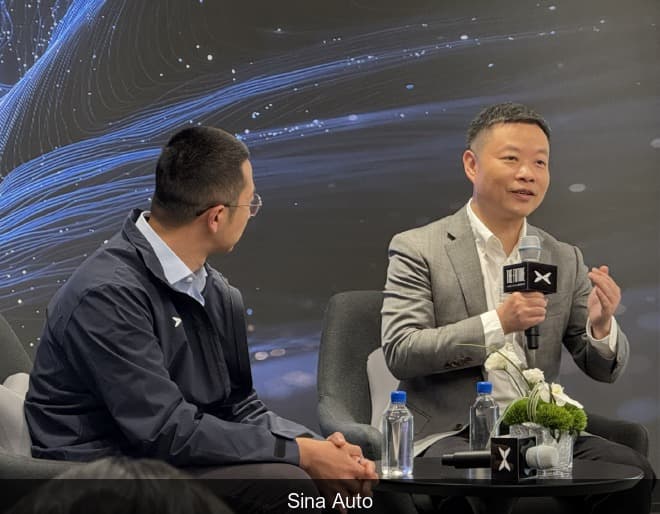
Chinese car manufacturer XPeng is making bold claims about its next-generation autonomous driving system, VLA 2.0, suggesting it will skip Level 3 autonomy altogether and head straight for Level 4. According to a recent media briefing featuring XPeng founder He Xiaopeng and General Intelligence Center head Liu Xianming, the company believes L3 is a technological and regulatory dead end. But can XPeng really deliver on its ambitious promises, and what does this mean for the future of autonomous driving, especially compared to established players like Tesla and the emerging competition from other Chinese brands like BYD, NIO, Li Auto, Geely, Chery, and Great Wall?
XPeng's VLA 2.0, or Vision Language Architecture, is being positioned as a "physical world large model" designed for the L4 era. The system aims to provide full-scenario autonomous driving capabilities, from navigating complex urban environments to handling parking and highway driving with minimal human intervention. He Xiaopeng stated that all "Ultra" and "Ultra SE" models will be equipped with VLA 2.0, offering customers a choice between basic and top-tier intelligent assisted driving. This strategy echoes Tesla's approach of offering different levels of Autopilot functionality, but XPeng is betting on a more rapid transition to higher levels of autonomy.
The company acknowledges that VLA 2.0 isn't quite at 100% Level 4 capability yet, but Liu Xianming emphasized the rapid pace of development. He claims new versions are released daily, constantly iterating on new problems. While a precise timeline remains elusive, He Xiaopeng predicts a "relatively complete L4-level system" within 1-3 years. This aggressive timeline puts pressure on XPeng to deliver significant advancements in a short period, especially as other Chinese automakers like NIO and Li Auto are also investing heavily in autonomous driving technology.
One key aspect of XPeng's strategy is the integration of the intelligent cockpit and intelligent driving functions. He Xiaopeng believes the automotive industry is rapidly moving towards cross-domain integration, drawing parallels to the robotics field. He envisions a future where autonomous driving, the intelligent cockpit, power, and chassis are seamlessly integrated, resulting in faster, safer, and more agile vehicles. This holistic approach is intended to move beyond passive driver assistance to active service, transforming cars into "powerful super-intelligent entities." This is a similar direction to what we see from other Chinese EV brands like BYD, who are also investing heavily in software and AI integration.
Thinking of Importing a Chinese EV? Don't Forget the Software!
The cutting-edge technology in Chinese EVs like XPeng, BYD, and NIO is undeniably impressive. But before you jump on the bandwagon, remember that the software experience is just as important as the hardware. Many of these vehicles are designed primarily for the Chinese market, which means the multimedia systems, apps, and voice assistants are often optimized for Mandarin speakers.
That's where localization services come in. Imagine trying to navigate London or Los Angeles with a sat-nav that only speaks Chinese! To truly enjoy your new Chinese EV, consider these essential upgrades:
* Multimedia & Menu Localization to English: A must-have for intuitive control.
* App Installation (Google Maps, Spotify, WhatsApp): Integrate your favorite apps seamlessly.
* SIM Card with Unlimited Mobile Internet: Stay connected on the go.
* Voice Assistant in English: Control your car with natural language commands.
* AI Driving Assistant: Ensure the AI understands your local driving conditions.
Don't let language barriers hold you back from experiencing the future of driving.
XPeng is also addressing the challenges of deploying autonomous driving technology in different regions. While Tesla has faced "acclimatization" issues with its Full Self-Driving (FSD) system in China, XPeng aims to avoid similar pitfalls by combining strong generalization capabilities with local data acquisition. Liu Xianming emphasized that VLA 2.0 already possesses robust capabilities without requiring extensive overseas data adaptation. The company plans to leverage local data in every market where XPeng vehicles are sold, while also utilizing world models to accelerate development in new regions. This approach is crucial for competing effectively in global markets, especially against established players like Tesla and emerging rivals like Geely and Great Wall.
One of the ongoing debates in the autonomous driving field is the value of human data for imitation learning. While some argue that human data is becoming less valuable, XPeng believes there is still an "infinite" amount of valuable data to be collected from the physical and human world. He Xiaopeng stressed the importance of collecting "high-quality, valuable, and ultra-large-scale data," highlighting the challenges of extracting meaningful insights from vast datasets. Liu Xianming added that the size of the models themselves is still increasing, requiring continuous optimization of chips, compilers, and models to improve efficiency. This data-driven approach is essential for achieving true Level 4 autonomy, but it also raises concerns about data privacy and security.
The "computing power arms race" is another hot topic in the autonomous driving industry. While some companies are focused on simply stacking up computing power, XPeng argues that the key is to utilize computing power effectively. Liu Xianming emphasized the importance of transitioning from general-purpose processors to dedicated processors (ASIC) to optimize performance. He also noted that large computing power must be matched with higher information density input and larger models, otherwise the computing power will be underutilized. This focus on efficiency is a key differentiator for XPeng, allowing them to deliver a smoother and more reassuring user experience. This is a similar approach to what we see from other Chinese brands like Chery, who are focusing on efficient and cost-effective solutions.
XPeng is confident that VLA 2.0 represents a significant leap forward in autonomous driving technology. He Xiaopeng estimates that it is "nearly 5 times ahead of the industry's top players" in terms of approach rate, sense of security and smoothness, and range of support. He believes that the number of takeovers, or instances where the driver needs to intervene, will be the most important indicator for users. XPeng aims to achieve a level of autonomy where the car can handle virtually any driving scenario, from parking lots to highways, with minimal human intervention. This ambitious goal would not only enhance the driving experience but also potentially transform the automotive industry. Imagine a future where your XPeng, or even a BYD or NIO, can automatically charge, navigate home after a night out, and handle all the mundane aspects of driving. That's the vision XPeng is pursuing with VLA 2.0.
FAQ
Q: What is the difference between Level 3 and Level 4 autonomy, and why is XPeng skipping Level 3?
A: Level 3 autonomy allows the car to handle most driving tasks in certain conditions, but the driver must be ready to take over at any time. Level 4 autonomy allows the car to handle all driving tasks in certain conditions, without requiring driver intervention. XPeng believes that Level 3 creates a challenging legal and technological gray area, as it's difficult to determine liability when the driver is expected to be a fallback. They believe focusing on Level 4 is a more direct path to full autonomy.
Q: How does XPeng plan to handle the regulatory challenges of deploying Level 4 autonomous driving technology?
A: XPeng is actively working with regulators to develop appropriate frameworks for autonomous driving. They are also focusing on geofenced deployments, where the technology is initially rolled out in limited areas with favorable regulations. As regulations evolve, XPeng plans to expand the deployment of its autonomous driving technology to new regions.
Q: How will XPeng compete with Tesla and other automakers in the autonomous driving space?
A: XPeng is differentiating itself through its full-stack self-development approach, its focus on cross-domain integration, and its data-driven development process. They believe that their ability to control the entire technology stack, from hardware to software, will allow them to deliver a superior autonomous driving experience. They are also leveraging local data and world models to adapt their technology to different regions, ensuring global competitiveness.